Cover Letter Basics

How to Write a Cover Letter (Step-by-Step Guide)

ApplyMate Team2026-03-21
how to write a cover lettercover letter guidejob applications

A complete step-by-step guide to writing a professional cover letter that sounds tailored, clear, and worth reading.

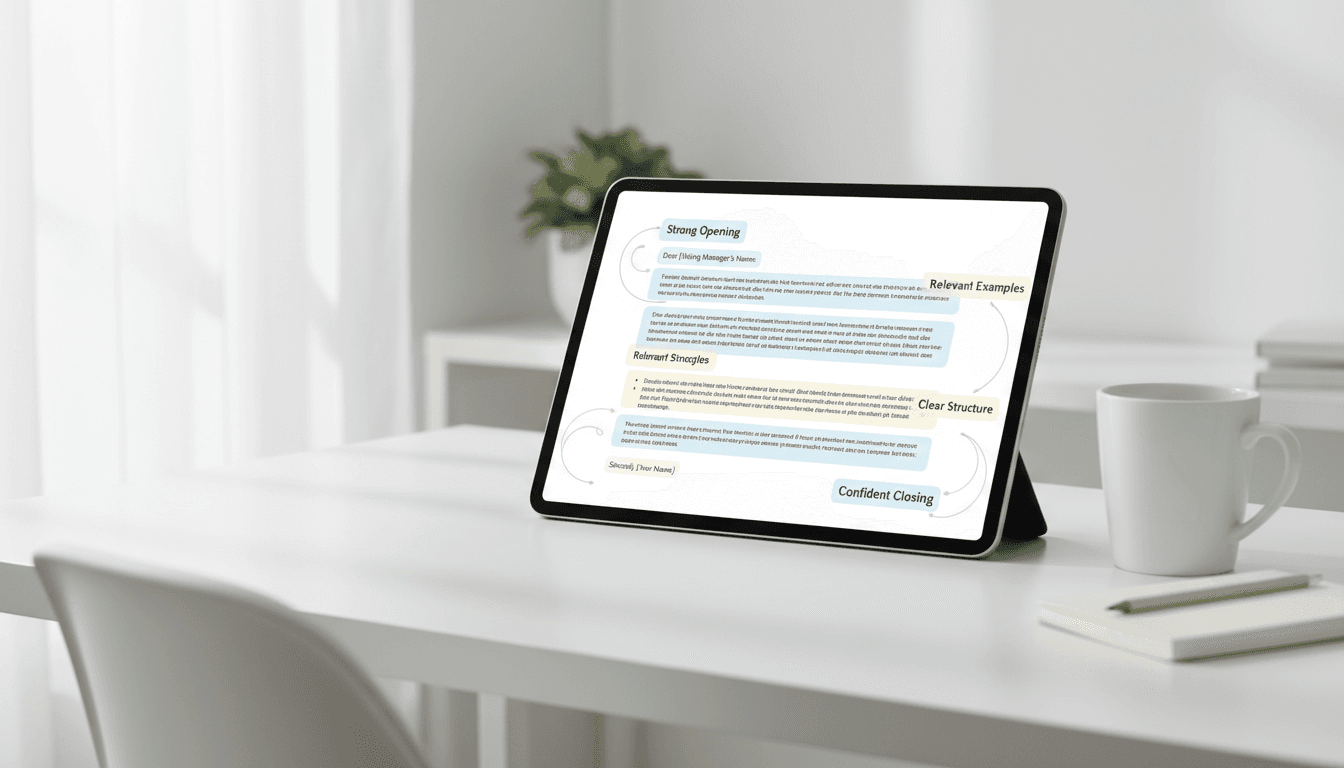
Cover letter structure diagram

How to write a cover letter step by step

If you are wondering how to write a cover letter, start by thinking about relevance instead of performance. Hiring managers are not looking for a dramatic speech. They want a short document that explains why your background makes sense for this specific role and company.

That is why a strong cover letter feels selective. It does not retell your entire resume. It chooses the parts of your experience that matter most, then connects them directly to the employer's needs in a way that feels easy to trust.

A well-written cover letter shows employers who you are, what you have done, and why you are the right fit beyond what your resume says. It gives context, judgment, and motivation that a bullet-point resume cannot always carry on its own.

In practice, learning how to write a cover letter means learning how to make your fit obvious. Once you understand that, the document becomes much easier to structure and much faster to edit across multiple applications.

ApplyMate Pro

Track your job applications and send follow-ups automatically with ApplyMate Pro

Save each role, keep your search organised, and use the seven-day reminder workflow to stay on top of follow-ups.
Example cover letter breakdown

What is a cover letter?

A cover letter is a one-page introduction to your application. It explains why you are applying, what strengths make you relevant, and how your experience connects to the role in front of you.

Unlike a resume, which lists experience in a structured format, a cover letter gives you room to interpret that experience. It helps the employer understand not just what you have done, but why it matters for this role right now.

That difference is what makes cover letters useful. A resume provides the record. A cover letter helps the reader make sense of that record faster.

  • Tell your story
  • Show personality
  • Explain your motivation

Cover letter structure that employers can scan quickly

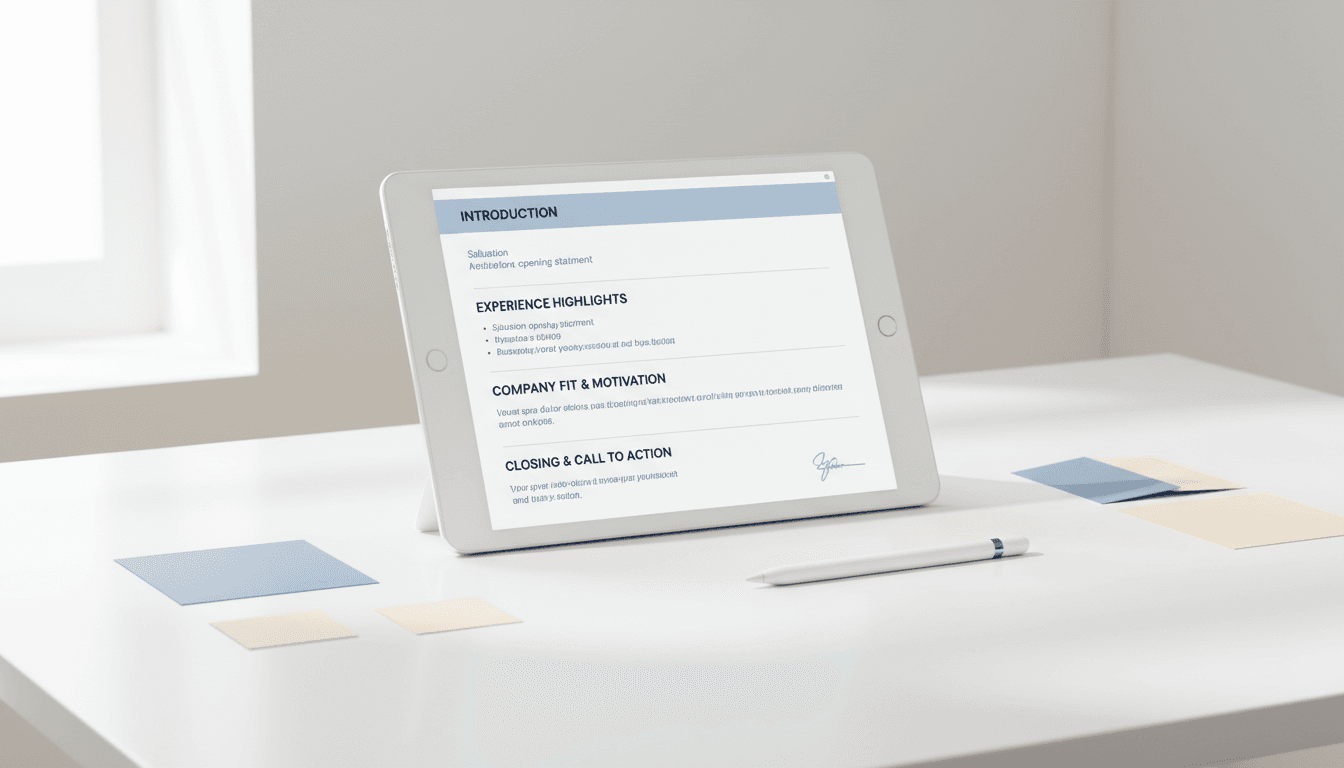
The easiest way to write a professional cover letter is to use a simple structure that hiring teams can scan quickly. You do not need a creative format. You need a clear flow that opens with relevance, supports your fit with examples, and closes with confidence.

Most effective cover letter guides come back to the same principle: keep the page readable. A recruiter should be able to understand your target role, your strongest evidence, and your motivation without re-reading sentences.

  • Introduction: state the role you are applying for and lead with a strong opening statement.
  • Skills and experience: highlight your most relevant achievements and focus on impact.
  • Why this company: show that you have done your research and can align with company goals or values.
  • Closing: end with a confident sentence such as 'I would welcome the opportunity to discuss how I can contribute to your team.'

A practical example of a strong opening

A good opening should immediately give the employer a reason to keep reading. That usually means naming the role and connecting it to a concrete strength or area of experience.

For example: 'I am excited to apply for the Marketing Manager position at XYZ Company, where I can contribute my experience in digital campaigns, team collaboration, and growth strategy.'

That opening works because it is specific. It tells the employer what role you want, hints at the value you bring, and avoids empty lines like 'I am writing to express my interest' that add nothing useful.

You can apply the same structure across industries. A Cover Letter for Software Engineer might lead with shipped products and technical impact, while a Cover Letter for Nurse might lead with patient care, documentation, and calm clinical communication.

Cover letter tips that improve readability

Once your structure is in place, the quality of the letter comes down to judgment. Good cover letters are selective. They choose the strongest information rather than trying to say everything at once.

This is where many applicants go wrong. They assume more detail is always better, when in reality a hiring manager usually responds more strongly to a focused example than to five vague claims in a row.

  • Keep it under one page.
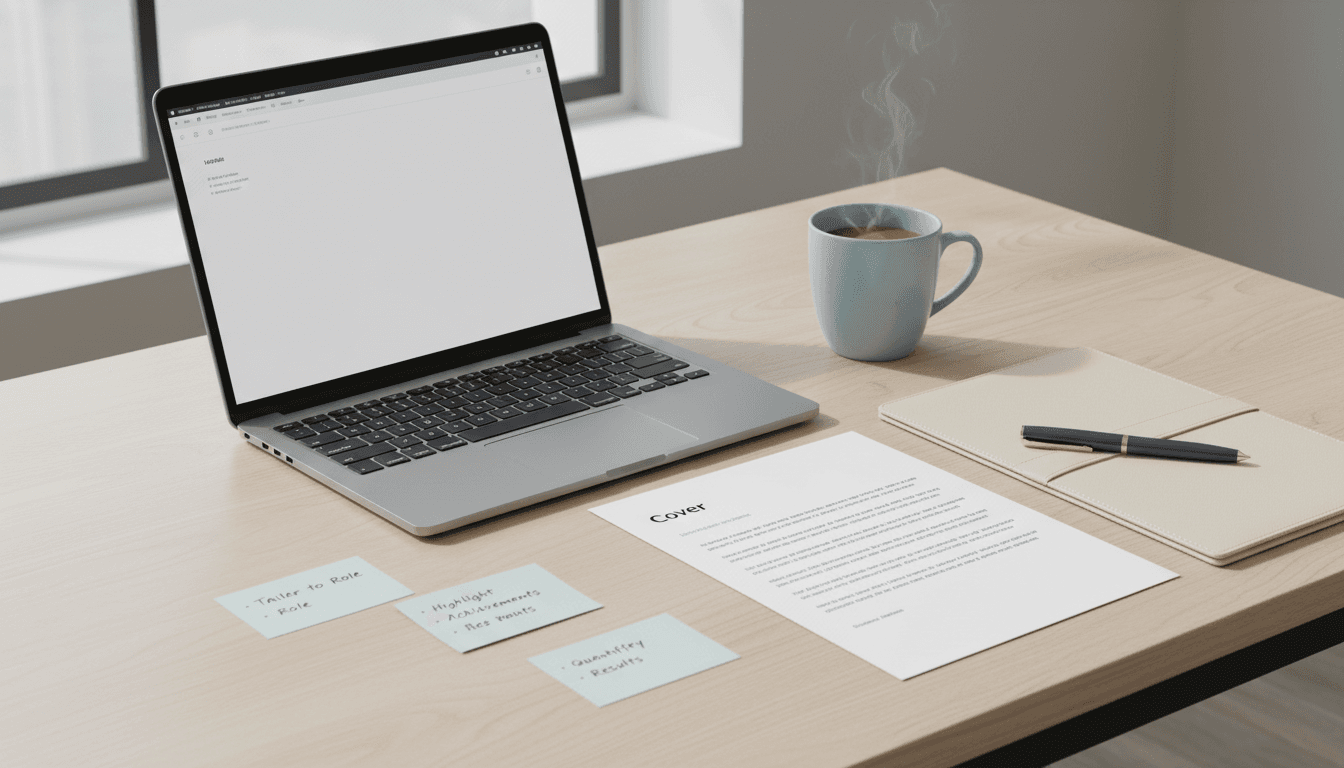
  • Tailor it to the job.
  • Avoid repeating your resume.
  • Focus on results.
  • Use clear, professional language.

Cover letter mistakes to avoid before you send it

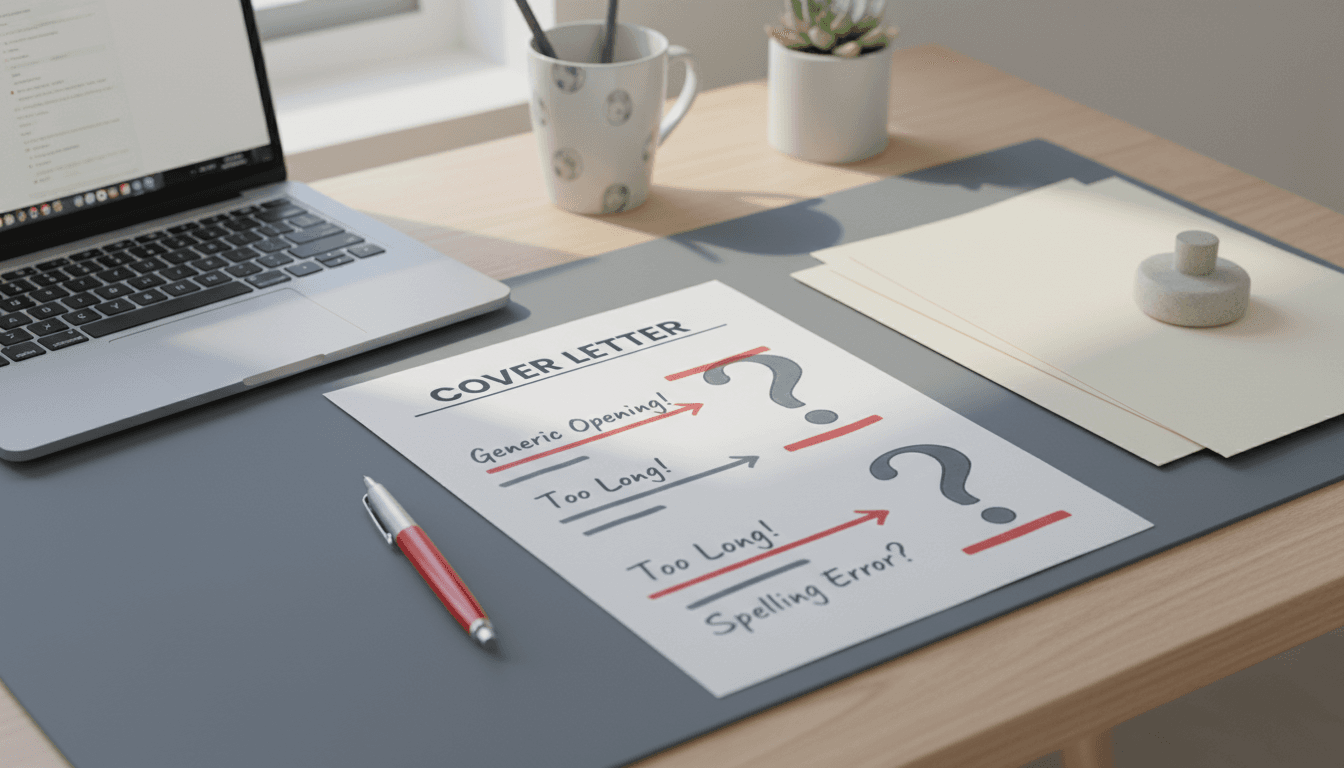
Most weak cover letters fail for predictable reasons. They are too generic, too long, or too disconnected from the employer. If the document could be sent to any company without changing a line, it will not help much in a competitive hiring process.

Formatting also matters more than people think. A strong letter should feel easy to read and easy to trust. Dense text blocks and vague language make even good experience look weaker.

If you want a deeper breakdown, compare this article with 10 Cover Letter Mistakes (And How to Fix Them) and How to Tailor a Cover Letter to a Job Description. Together, those guides cover the most common reasons otherwise solid applications underperform.

  • Using generic templates
  • Writing too much
  • Not addressing the company
  • Poor formatting

Conclusion

Learning how to write a cover letter well is really about learning how to connect your background to a specific employer's needs. When you lead with relevance, support your fit with examples, and keep the letter concise, the whole application becomes stronger.

If you want a faster start, review role-specific pages such as Cover Letter for Software Engineer, Cover Letter for Nurse, and Cover Letter for Customer Service. You can also compare this guide with Best AI Cover Letter Generators in 2026 and Cover Letter Tips That Make Your Application Stronger for more practical help.

Use ApplyMate

Turn this advice into a faster first draft

ApplyMate helps you turn a job description and your resume into a more tailored cover letter, then refine it before you apply.

You can also save the role in your tracker and keep your application process organised. ApplyMate Pro is built for active job seekers who want help staying on top of follow-ups after 7 days.

FAQ

How to Write a Cover Letter (Step-by-Step Guide) FAQs

Do I still need a cover letter in 2026?+

Yes. Many employers still expect one, especially for professional roles and competitive applications.

How long should a cover letter be?+

Typically 250 to 400 words, which keeps the document concise and usually under one page.

What is the best way to write a cover letter quickly?+

The best way to write a cover letter quickly is to use a simple structure, match your strongest examples to the job, and tailor the opening to the employer.

Profession Pages

Related profession guides

Related Articles

More blog posts